Picture someone in Parramatta typing "best plumber near me" into ChatGPT. A short list of names comes back, with phone numbers and opening hours. They call the first one that looks right. If your business is missing from that list, or the details about you are wrong, you never find out about the job you lost.
To get found in AI answers, make sure your business details are correct everywhere, describe your services and service areas in plain words on your website, let search crawlers read your pages, and keep your main pages up to date. Google says there are no extra requirements or special tricks to appear in its AI answers. It comes down to clear, honest and useful information.
What does "getting found by AI" actually mean?
AI answer tools such as ChatGPT, Google AI Overviews and Google AI Mode write a short answer to a question, instead of only showing a list of links. When someone asks about a business or a service, these tools collect facts from websites, directories and review sites, then put them together in one summary.
Getting found by AI means two things. Your business is one of the sources the tool uses, and the details it gives about you are correct.
You may see two short names for this work. AEO means answer engine optimisation. GEO means generative engine optimisation. Both mean the same practical thing: make your information easy for AI tools to find, understand and trust.
The good news comes straight from Google. Its guidance says there are no additional requirements to appear in AI Overviews or AI Mode. A page needs to be indexed and eligible to show in Google Search with a snippet, and that is all. You do not need special code or secret files.
Why does AI get business details wrong?
AI tools do not phone your shop to check your hours. They read what has been published about you online. If your website says one thing and a directory says another, or a fact is missing, the tool can pick the wrong one or guess.
Two recent studies show how often this happens.
Treat these as a warning, not as exact numbers for Australia. Both studies were done overseas, and both were run by companies that sell AI visibility services. Insites also used each business's Google Business Profile as the answer key, so an out of date profile can look like an AI mistake. That is a good reason to check your own profile first.
The London researchers noted that AI tools lean on public web data, which favours large brands that are mentioned in many places. A small business has fewer places mentioning it, so a single wrong listing can matter more.
Dana runs a bakery in Newtown. Last year she changed her closing time to 3pm, but a food directory still says 5pm. A customer asks ChatGPT if the bakery is open at 4pm, and the answer says yes. They walk over and find the door locked.
Dana never sees this lost sale. Nobody leaves a review about a visit that went wrong because of an old directory.
How do you check what AI says about your business?
This takes about 15 minutes and costs nothing. Do it before you change anything, so you know what needs fixing.
- Ask ChatGPT about you by name.Type: "What are the opening hours, phone number and services of [your business] in [your suburb]?"
- Ask a question like a customer would.Type: "Who are the best [your service] in [your suburb]?" and see whether your business is named.
- Search your business name on Google.Read the AI Overview if one appears. Try the same customer question in Google too.
- Write down every mistake.Look at the phone number, business name, website address, hours, address and services. Insites found phone numbers, websites and names were the most common errors, so check those first.
How do you fix wrong details?
You cannot edit an AI answer yourself, so fix the places it learns from. Work through this list in order.
- Fix your Google Business Profile first.Google's rules ask for the name people see on your shopfront and signs, with no taglines or phone numbers added. Use an accurate address or service area, your regular opening hours, special hours for public holidays, and a phone number that reaches your business directly. Choose as few categories as you can to describe your core business. Google says edits usually take up to 10 minutes to review, but sometimes up to 30 days. Our guide to local SEO basics for Sydney businesses covers the profile in more detail.
- Say it clearly on your website.Put your business name, address or service area, phone number, opening hours and a plain list of services on a page as normal text, not only inside an image or a PDF.
- Correct other listings.Check your Facebook page, Apple Maps, Bing Places and any local or industry directories. Use exactly the same wording everywhere.
- Check again in a few weeks.Ask the same questions you asked before. AI answers change as the tools read sources again, so one fix is not the end of the job.
How do you make your website easy for AI to read?
Even a correct website can be invisible if AI tools cannot read it. Three simple checks cover most problems.
1. Let the crawlers in. Visit yourwebsite.com.au/robots.txt. This small file tells search bots what they may read. Google says to allow crawling, and OpenAI recommends allowing its search crawler, which has the technical name OAI-SearchBot, so your site can appear in ChatGPT search. OpenAI says changes can take about 24 hours to be picked up. OpenAI also has a separate crawler called GPTBot, which is used for training its models, and you can allow or block that one separately. If you are not sure how to read this file, ask whoever built your website.
2. Put key facts in text. Google says important content should be available as text. Prices, services, areas and opening hours belong in the page itself.
3. Make sure your text loads without a click. Research by Vercel found that major AI crawlers, including OpenAI's GPTBot and Anthropic's ClaudeBot, do not run JavaScript. If your FAQ or service details only appear after a visitor clicks, or after a script runs, those crawlers may never see them. This can change over time, so treat it as a safe habit.
Open one of your service pages, right click and choose "View page source". Press Ctrl and F, then search for a sentence from your FAQ. If you cannot find it, ask your web developer to put that text directly into the page.
If you add structured data (a type of code that labels your content), Google says it should match the text people can see on the page. Google also says there is no special schema you need to add for AI features.
Why should you keep your main pages fresh?
Ahrefs studied about 17 million links cited by AI assistants and Google. The pages cited by ChatGPT, Perplexity, Gemini and Copilot were on average 1,064 days old, against 1,432 days for pages in normal Google results. That makes AI citations about 25.7% fresher. ChatGPT showed the strongest lean towards newer pages. Google's own AI Overviews did not: they cited pages slightly older than regular results.
There are important limits. Ahrefs says this shows a link between age and citation, not proof of cause. The pages AI cited were still nearly three years old on average, and Ahrefs says quality matters more than freshness. Google's John Mueller has warned against changing dates on a page without making real changes.
So the sensible approach is modest. Every few months, review the three pages that describe what you actually do. Add something real, such as a new price, a recent project (with permission), a new suburb you serve or an answer to a question customers keep asking. Do not just change the date.
How do you build proof that people trust you?
Google says it wants helpful, reliable content written for people. Nobody can promise a shortcut into AI answers, so the basics matter more than tricks.
- Ask happy customers for Google reviews, and reply to them.
- Write pages that answer the questions customers really ask you on the phone.
- Show who is behind the business, with a real name, photo and experience.
- Get listed by local groups, suppliers and industry bodies that link to your website.
A Penrith electrician writes a page called "How much does it cost to install a ceiling fan?" using real prices from recent jobs, and updates it each quarter. When someone asks an AI tool about ceiling fan costs in Penrith, the page gives the tool clear facts to use.
Frequently asked questions
How do I get my business to show up in ChatGPT?
There is no sign up form. ChatGPT search finds businesses from websites and other public sources. Make sure your details are correct on your Google Business Profile, your website and online directories, allow OpenAI's search crawler in your robots.txt file, and publish clear pages about what you offer and where. OpenAI says sites that block its search crawler will not appear in ChatGPT search answers, apart from possible links.
What is the difference between SEO, AEO and GEO?
SEO is search engine optimisation, which helps your pages rank in search results. AEO is answer engine optimisation, and GEO is generative engine optimisation. Both of those aim to make AI tools use and quote your information correctly. In practice the work overlaps a lot: accurate details, clear pages and trusted sources help with all three.
Do I need special code or an AI file to appear in Google AI answers?
No. Google says there are no additional requirements to appear in AI Overviews or AI Mode, and no special schema, machine readable file or AI text file is needed. Your pages must be indexed and eligible to appear in Google Search with a snippet.
How long does it take for AI answers to show my corrected details?
Nobody can promise a date. Google says Business Profile edits usually take up to 10 minutes to review but can take up to 30 days. OpenAI says robots.txt changes can take about 24 hours to be picked up for search. AI answers then change as the tools read their sources again, so check again after a few weeks.
Can I edit or remove what Google's AI says about my business?
Not directly. There is no edit button on an AI answer. The practical fix is to correct the information it draws from, such as your Google Business Profile, your website and other listings. If the answer shows a feedback option, you can also report the mistake there.
Sources
- Google Search Central, AI features and your website (current guidance, checked 10 October 2026).
- Google Business Profile Help, Guidelines for representing your business on Google (current guidance, checked 10 October 2026).
- Google Business Profile Help, Edit your Business Profile (current guidance, checked 10 October 2026).
- OpenAI, Overview of OpenAI crawlers (current documentation, checked 10 October 2026).
- Insites, Does ChatGPT hallucinate local businesses? The data on AI accuracy (23 July 2026).
- IT Brief UK, London SMEs suffer AI misinformation in search tests (Searchable study) (25 June 2026).
- Ahrefs, New Study: AI Assistants Prefer to Cite Fresher Content (17 Million Citations Analyzed) (28 July 2025).
- Vercel, The rise of the AI crawler (research article).
Figures come from the original pages linked above, checked on 10 October 2026. Insites and Searchable sell AI visibility services, and Ahrefs sells SEO software, so read their findings as useful signals rather than final proof. Examples marked imagined are made up to explain an idea.
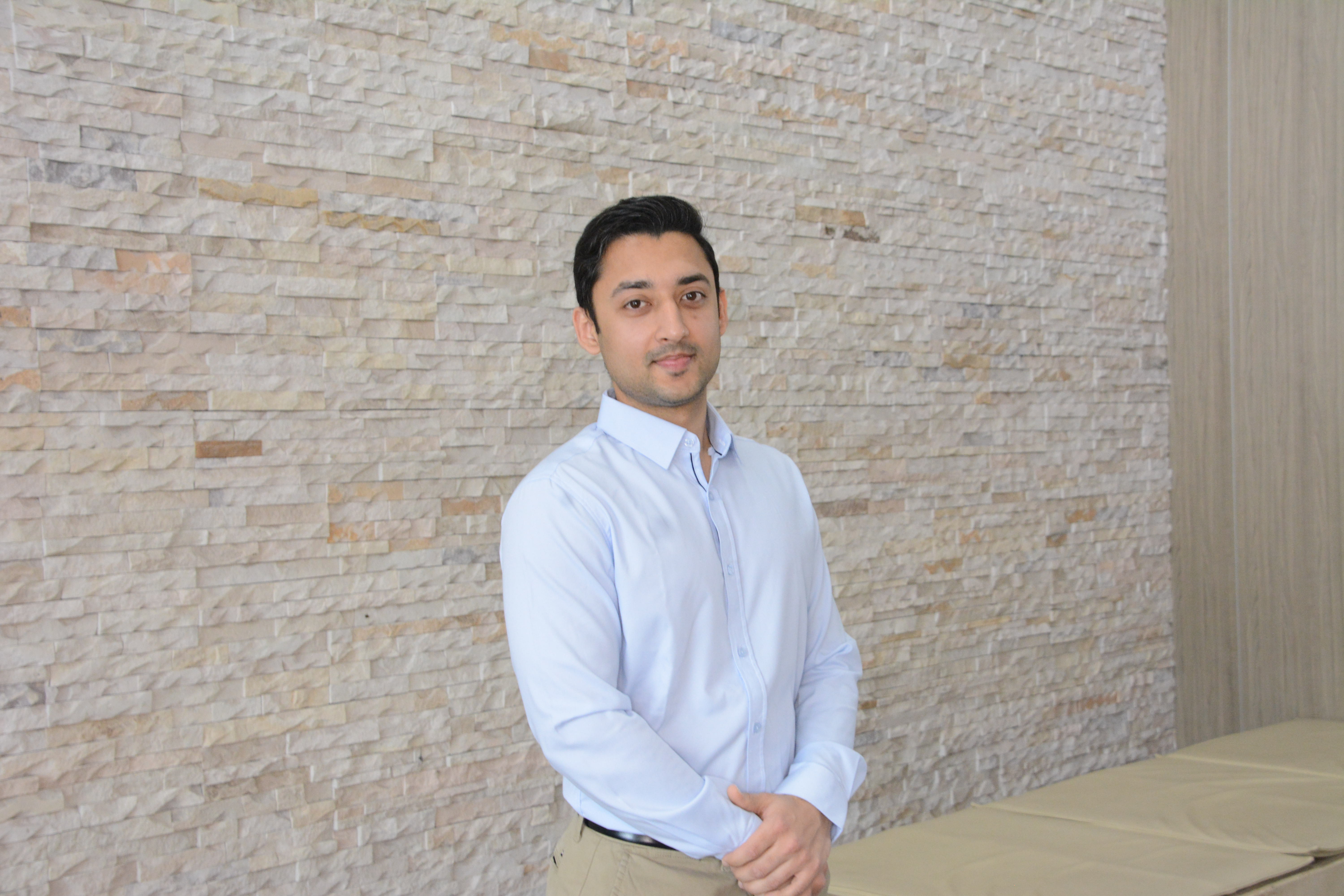
Ashutosh Tandel
Founder of Your Local Marketer, a Sydney based freelance digital marketing consultant who helps small businesses get found online without the jargon.
Not sure what AI says about your business?
Book a consultation and we can look at what AI tools say about your business, then work out what to fix first.
- No obligation
- Direct with Ashutosh
- Reply in 1 to 2 business days